Free to Download
Coloring Pages
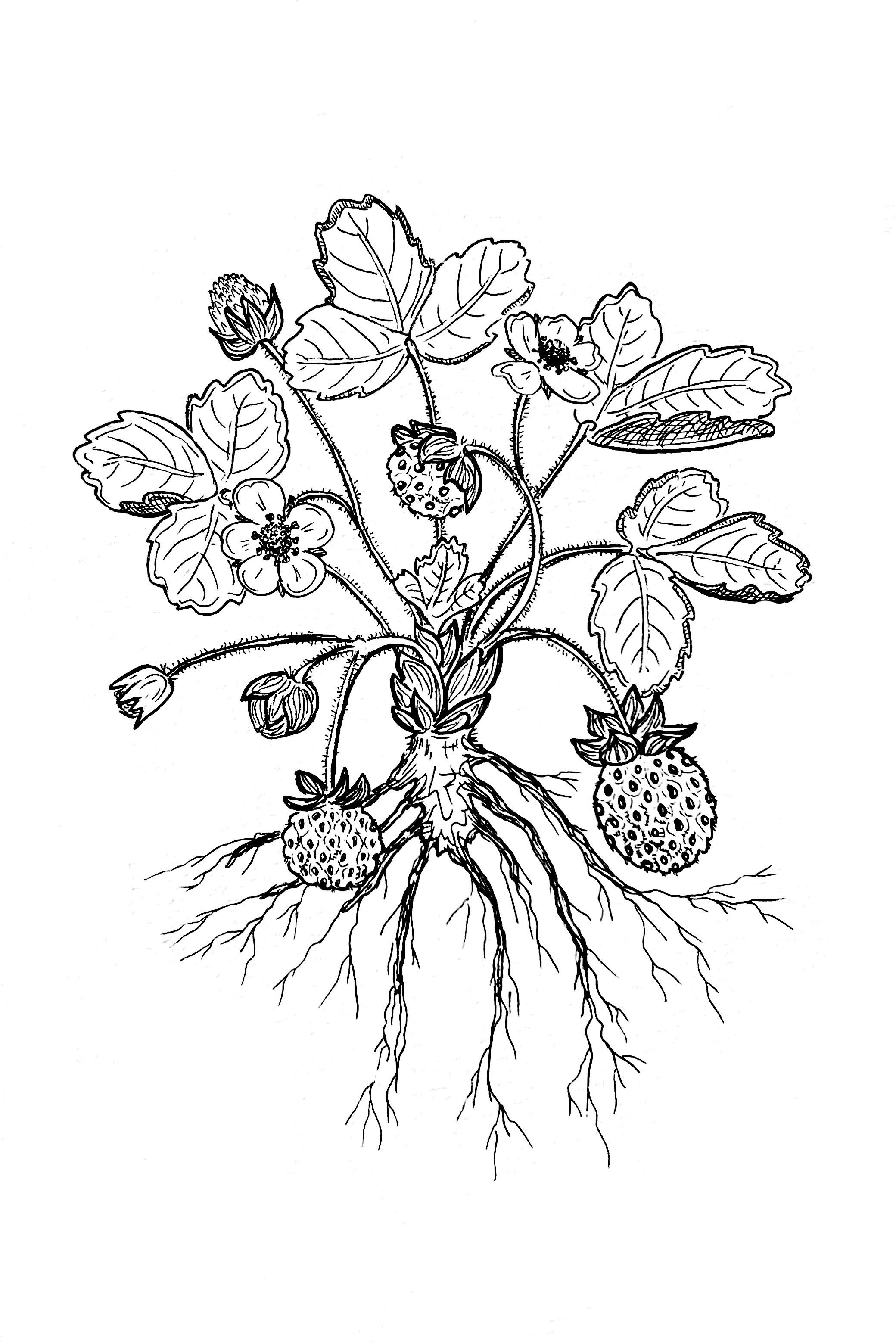
Fragaria chiloensis
Beach Strawberry
An upland plant along dunes and beaches with dark, glossy evergreen leaves, white flowers , with a small and delicious strawberry. Great ground cover and important for pollinators.
Fragaria chiloensis
Beach Strawberry
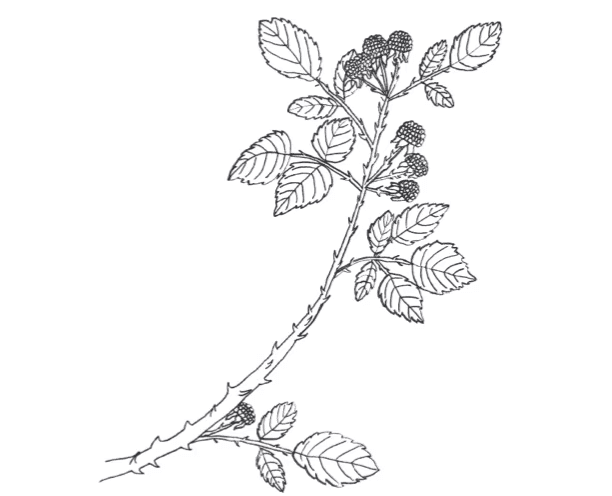
Rubus Leucodermis
Blackcap Raspberry
With silver canes and rich purple fruit, Blackcap Raspberry restores balance to the landscape and offers sweetness to all who find it.
Rubus Leucodermis
Blackcap Raspberry
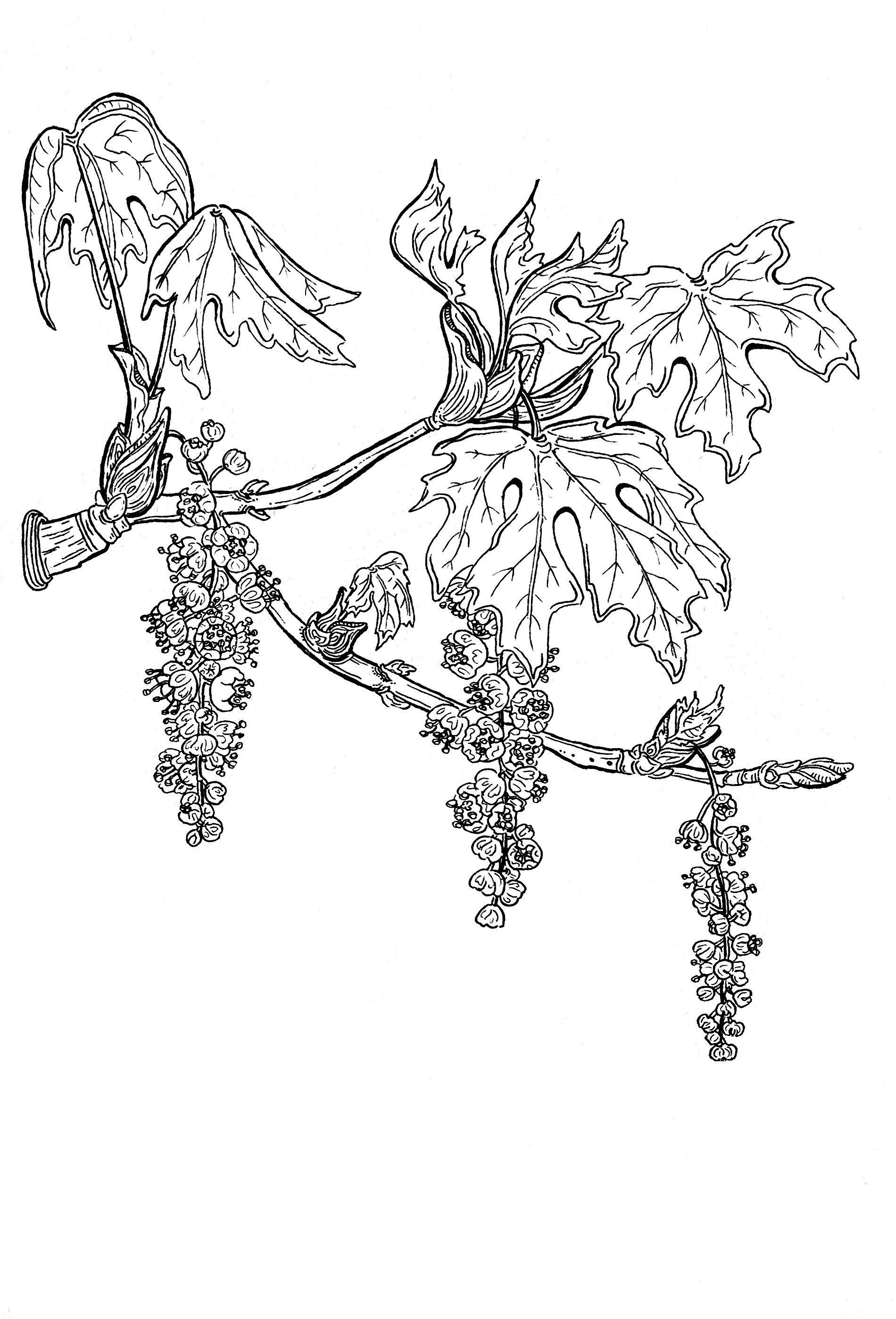
Acer macrophyllum
Bigleaf Maple
An upland tree common in disturbed areas or riparian areas. Large leaves and home to many other plants that can grow on mature maples. Indigenous uses included paddles and medicines. Makes a delicious and high value maple syrup.
Acer macrophyllum
Bigleaf Maple
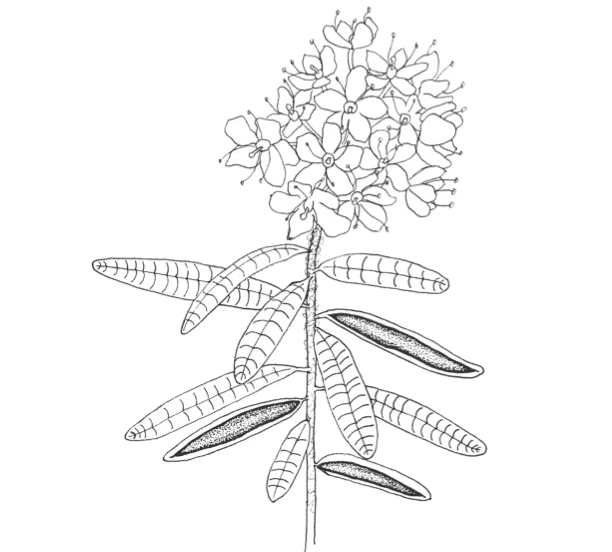
Ledum groenlandicum
Bog Tea
An evergreen shrub of northern wetlands, Bog Tea has long been used by Indigenous peoples for medicine and tea. Its fragrant leaves embody resilience in cold, acidic soils.
Ledum groenlandicum
Bog Tea
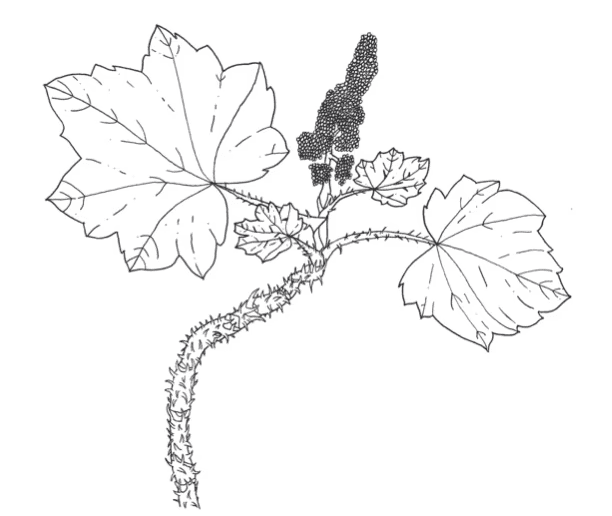
Oplopanax horridus
Devil's Club
In the shaded understory, Devil’s Club spreads wide leaves that catch the forest’s filtered light. It shelters salmon streams and songbirds alike, a quiet force in the rhythm of northern woods.
Oplopanax horridus
Devil's Club
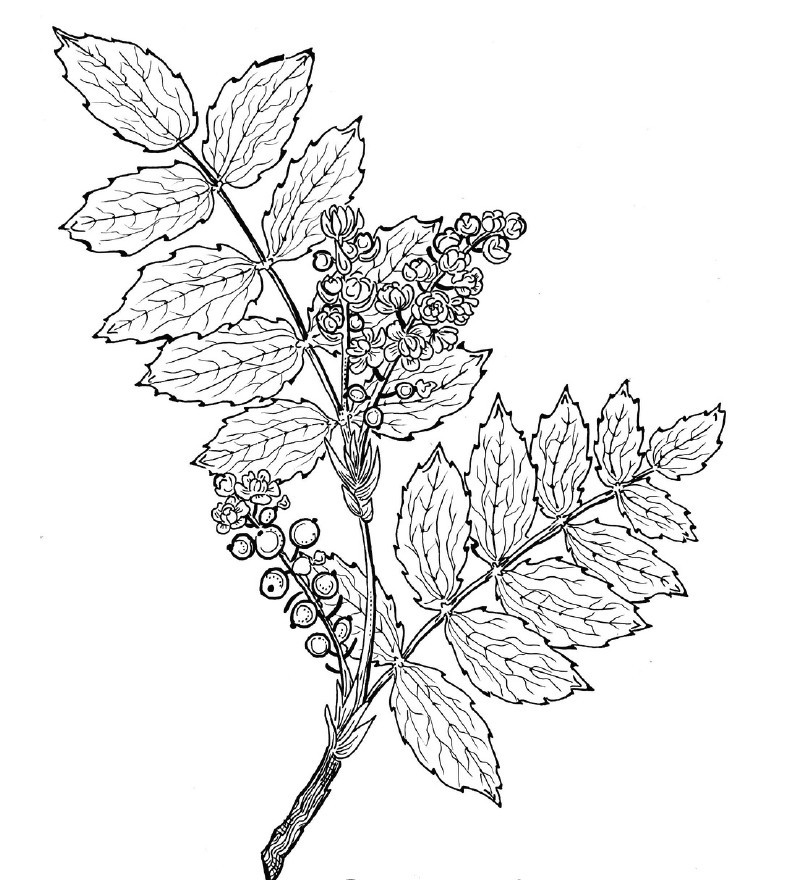
Mahonia Nervosa
Low Oregon Grape
Also called dull Oregon grape. An upland shrub with dark evergreen leaves and beautiful small yellow flowers and tart blue/purple berries. Common in Douglas-fir understories. Indigenous uses included medicines and tees with berries being mixed with sweeter berries.
Mahonia Nervosa
Low Oregon Grape
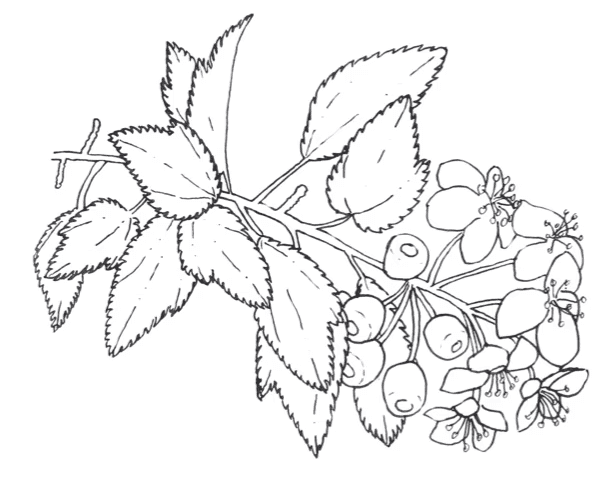
Malus Fusca
Pacific Crab Applle
Found along rivers and estuaries, this small, hardy tree bears tart fruit that sustained coastal communities. Its blossoms and fruit mark the turning of the seasons and the strength of relationship to place.
Malus Fusca
Pacific Crab Applle
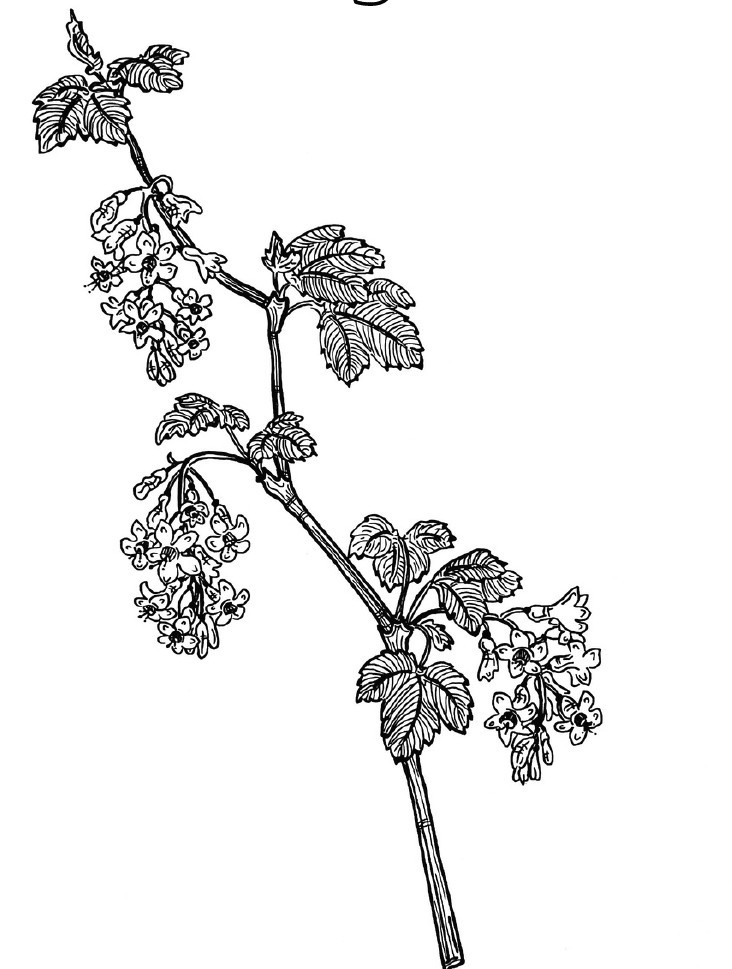
Ribes sanguineum
Red Flowering Currant
An upland shrub with stunning dark pink to red flowers and a purple berry. Loved by landscapers and pollinators alike!
Ribes sanguineum
Red Flowering Currant
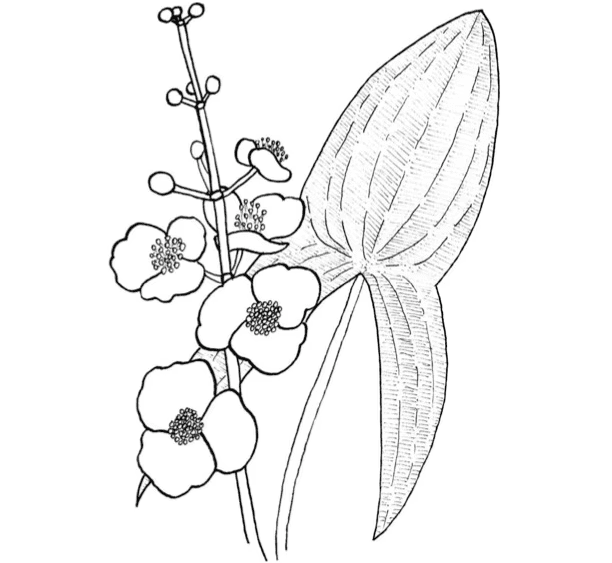
Sagittaria latifoila Copy
Red Huckleberry
A plant commonly found on nurse logs with small, alternate oval leaves and green branches. The leaves make delicious tea, and the berries can be eaten raw.
Sagittaria latifoila Copy
Red Huckleberry
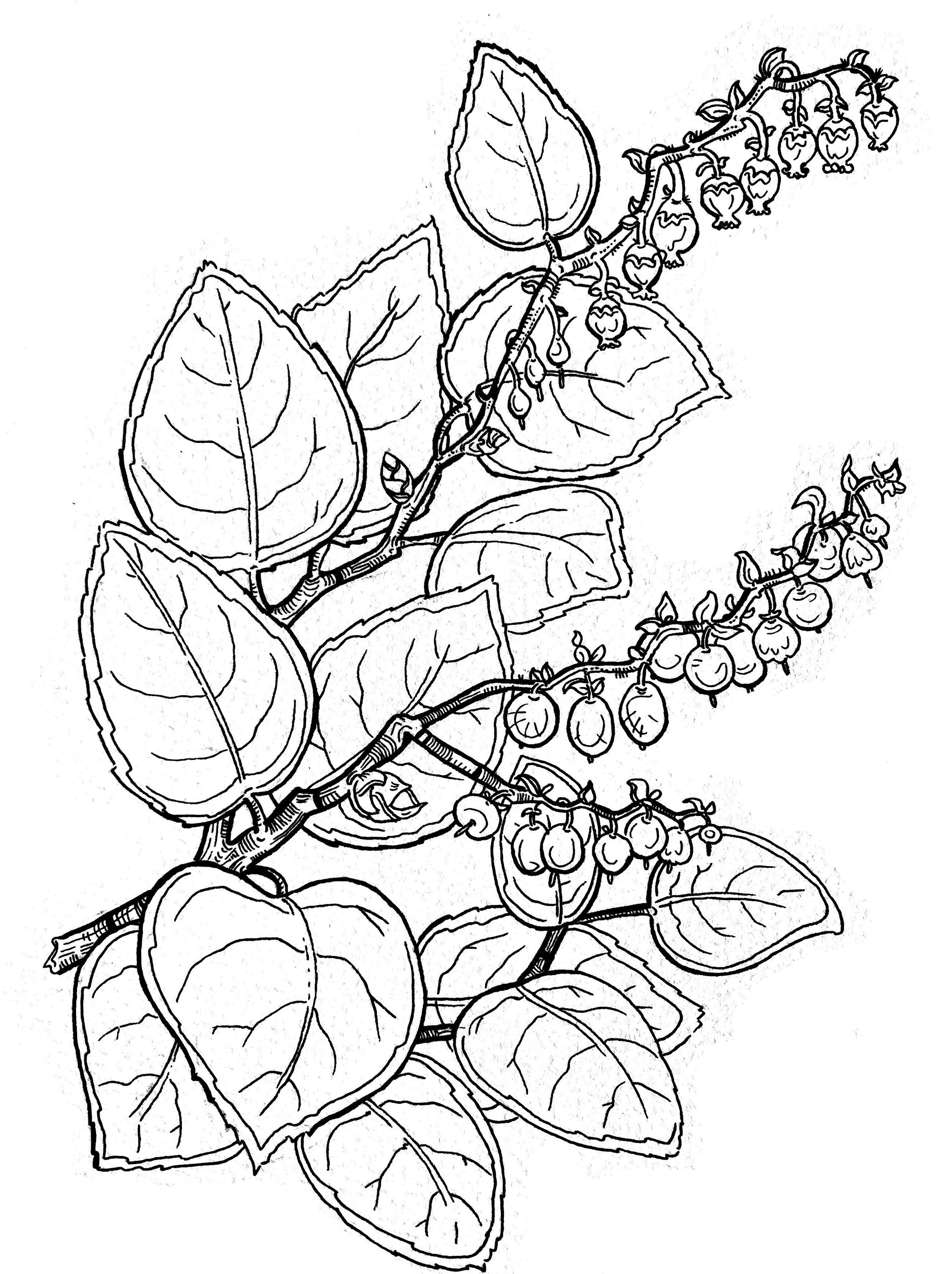
Gaultheria Shallon
Salal
A plant common in many habitats with oval, evergreen shaped leaves. Soft berries, be careful picking them, that are high in antioxidants that are slightly sweet and can be eaten raw.
Gaultheria Shallon
Salal
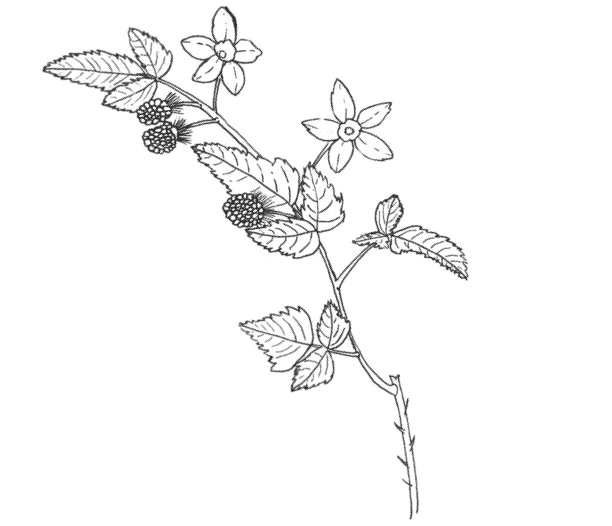
Rubus spectabilis
Salmonberry
Bursting with bright orange and pink fruit, Salmonberry is among the first to bloom in spring — a source of nourishment and joy for people, pollinators, and bears emerging from rest.
Rubus spectabilis
Salmonberry
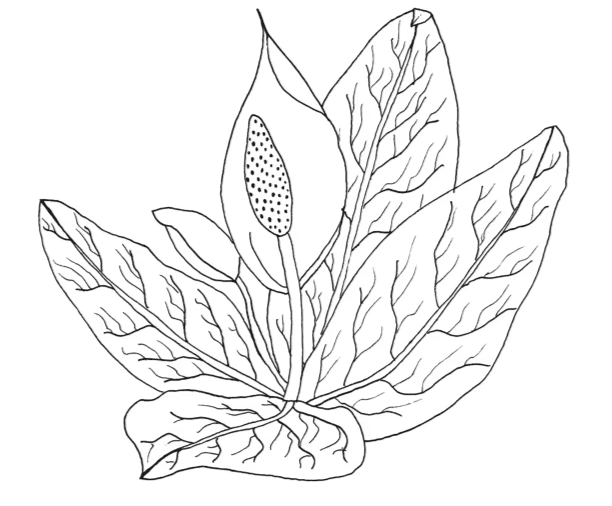
Lysichiton americanus
Skunk Cabbage
Emerging early from wet soil, Skunk Cabbage brings the first color to the forest floor. Its warmth awakens pollinators and signals the quiet renewal of spring.
Lysichiton americanus
Skunk Cabbage
Invest in us
Your contribution immediately supports our efforts to build a healthy Pacific Northwest, where productive lands and thriving ecosystems coexist.
Invest in us
Your contribution immediately supports our efforts to build a healthy Pacific Northwest, where productive lands and thriving ecosystems coexist.
Invest in us
Your contribution immediately supports our efforts to build a healthy Pacific Northwest, where productive lands and thriving ecosystems coexist.

Agroforestry Northwest uses agroforestry practices to build resilient, abundant, and inclusive connections to Pacific Northwest lands.
Website by Emma Joy

Agroforestry Northwest uses agroforestry practices to build resilient, abundant, and inclusive connections to Pacific Northwest lands.
Website by Emma Joy